

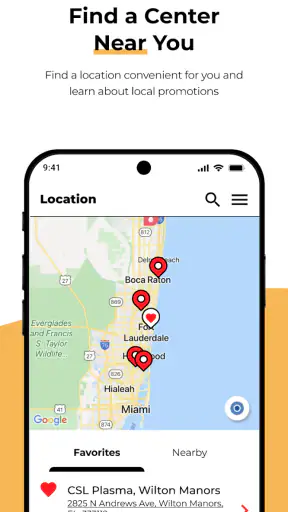
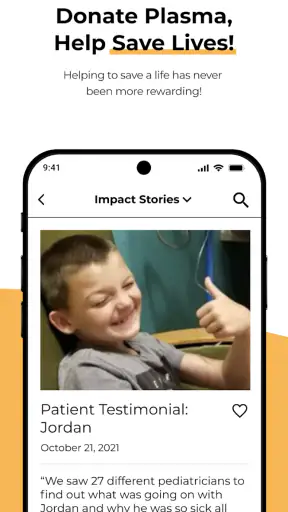
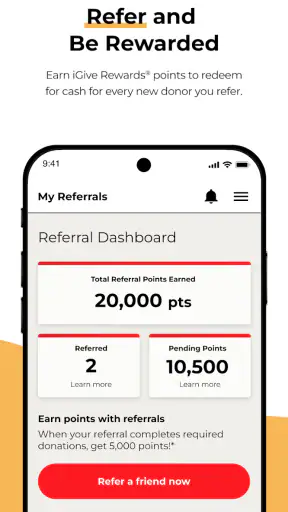
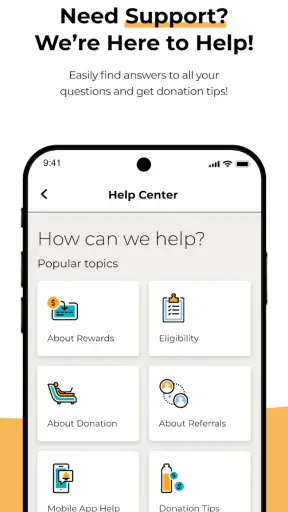
When I think about a medical app, I do not expect entertainment or a long list of extra tools. I want something that helps me complete a real task without making me repeat information or search through several screens. CSL Plasma is built around that practical idea: it supports people who donate plasma at CSL Plasma centers and puts donor-related tasks in one mobile place. After using it, I found that its value depends less on flashy design and more on whether it fits naturally into the routine before, during, and after a donation visit.
Developed by CSL PLASMA INC., this free medical app is aimed at an everyday process that can otherwise involve paper details, waiting, and remembering when to return. Its store summary focuses on saving time, receiving rewards, and helping save lives, but the more useful question is how well it handles the small decisions around a visit. Can I prepare without confusion? Can I check what I need at the right moment? Does the app remain comfortable when I open it repeatedly or use it while moving through a busy center? Those are the points that matter most to me.
The best way to view CSL Plasma is as a companion to the donation process, not as a general health tracker. It is not designed to replace medical advice, diagnose symptoms, or organize every part of personal healthcare. Its audience is much narrower, which is a strength when I already donate or am considering donating through CSL Plasma, but it is also the main reason someone outside that setting may find little use for it.
How CSL Plasma feels in real donor routines
Speed matters most before leaving home
The app’s most important performance test happens before I leave for a center. This is when I am usually checking practical information, reviewing what I need to remember, or confirming details connected with my donor routine. A useful donor app should reduce mental effort at this stage. I do not want to open it and feel that I have traded one administrative chore for another.
In normal use, CSL Plasma feels focused rather than overloaded. That focus makes the experience easier to understand than a broad healthcare app that mixes appointments, prescriptions, insurance, medical records, and wellness content. Here, the context is clear: I am dealing with plasma donation. The narrower purpose helps me get oriented quickly, especially when I have not opened the app for several days.
Still, speed is not only about how quickly a screen appears. It is also about how quickly I can decide what to do next. A donor may be heading out between work, school, or family responsibilities, so a screen that requires unnecessary searching can make the whole process feel slower even when the app itself responds normally. I found it helpful to open the app before I am in a hurry, review the relevant information, and avoid treating it as something I should learn while standing at the front desk.
That small habit is one of my more useful tips: use the app as a preparation tool rather than waiting until the last minute. If I already know what I want to check, the mobile format becomes much more convenient. If I open it without a clear purpose and browse around, the experience feels less efficient because the app is not trying to be a complete personal health dashboard.
What happens during a busy donation day
The heavier-use moments are not necessarily long sessions. They are repeated short visits: checking information before leaving, looking again after arriving, and returning later to review donor-related details. That pattern is important because an app can seem fine during one quick launch but become frustrating when I need it several times in the same day.
CSL Plasma makes more sense in this repeated-checking pattern than in a long browsing session. I would not install it to spend time exploring content. I would open it because I have a specific donation-related reason. That keeps resource demands naturally modest in ordinary use. The app is not the kind of tool I expect to dominate battery life or occupy my attention for hours, although the actual experience can still vary with the phone, operating system, network, and what else is running.
A realistic example is a donor with a morning appointment who checks the app while getting ready, reviews the same information while traveling, and opens it again after the visit. The advantage is having one familiar place for the process instead of relying entirely on memory. The trade-off is that the app cannot remove every part of an in-person medical procedure. There may still be waiting, staff instructions, screening, and center-specific steps that no phone screen can replace.
That distinction matters when judging speed. If the physical visit takes time, the app should not be blamed for the entire experience. Its job is to make the surrounding administration clearer and less scattered. I see it as a small efficiency layer around the appointment, not a promise that donating plasma becomes instant.
Reliability is more than a successful installation
For a medical and donor-focused app, reliability has two sides. First, it should open and behave consistently. Second, the information it presents should be treated as part of a real-world process, not as casual content that I can ignore. I am more forgiving of a slightly plain interface than of an app that makes me unsure whether I am looking at current or relevant donor information.
CSL Plasma has a solid public footprint, with more than a million installations and an average rating of 3.9 from roughly eleven thousand ratings. Those figures suggest that many people find enough value to keep the app in their donor routine, while the rating also tells me not to expect a universally smooth experience. I would interpret it as a useful but not flawless service app, rather than a polished consumer product that satisfies every user.
The developer is CSL PLASMA INC., which gives the app a direct connection to the organization whose donation process it supports. That is more reassuring to me than using an unrelated planner or a generic rewards tool to manage donor activity. At the same time, being official does not automatically make every interaction perfect. A branded app can still feel slow on an older phone, require patience during network problems, or present a workflow that does not match every donor’s preferred way of organizing information.
One practical reliability tip is to avoid making the app your only memory system. I would still pay attention to staff instructions and keep track of important personal plans separately. If the phone battery is low, the connection is poor, or the app needs maintenance, a backup habit prevents a small technical problem from becoming a stressful appointment problem. That is not a criticism unique to CSL Plasma; it is simply sensible whenever a mobile tool supports an in-person medical routine.
Stability when the phone is not ideal
Device conditions can change the impression of any app. CSL Plasma supports Android devices running version 7.0 or later, which gives it a broad compatibility range. That is useful for donors who do not replace their phone frequently. However, compatibility on paper does not mean every older device will feel equally quick. A phone with limited free storage, an aging battery, or many background apps may make launches and screen changes feel less immediate.
I would be especially careful about judging the app on an older device during a rushed visit. If the phone is already struggling with ordinary tasks, a medical app that depends on current information may feel less dependable even when the app itself is functioning. Closing unnecessary apps, keeping the operating system in a stable condition, and opening CSL Plasma before leaving are simple ways to reduce that friction.
On a newer phone, the app’s focused purpose should work in its favor. There is less reason for it to demand the resources associated with games, video editors, or social feeds. I would not expect the same kind of heat, battery drain, or sustained processor use from this app as from a graphics-heavy application. That is a reason it fits well on a donor’s everyday phone, especially for someone who wants a practical tool rather than another demanding service.
There is also a human-device constraint: the app is only useful if I can access it comfortably when I need it. A donor who shares a phone, rarely carries a smartphone, or prefers handling all appointments in person may not gain much from installing it. The app can streamline a routine, but it cannot make digital access a requirement disappear. For those users, the center’s normal process or direct assistance may be a better fit.
Where it compares well with ordinary alternatives
Without CSL Plasma, a donor might rely on memory, handwritten notes, general calendar reminders, or a browser session. Those alternatives can handle one part of the process, but they are disconnected. A calendar can remind me that I planned to donate, yet it does not provide the same donor-focused context. A note can store a question or a personal reminder, but it cannot replace an app connected to the organization managing the donation experience.
That is where CSL Plasma has its clearest advantage. It is more specialized than a calendar and more relevant than a generic health app. I do not have to build my own system from separate reminders and notes. For regular donors, that reduction in scattered information may be more valuable than advanced design.
The comparison changes for someone who wants broad health management. If my main goal is tracking medication, exercise, symptoms, lab results, or appointments across different providers, CSL Plasma is not the right central tool. It is too specific by design. A general health platform or a provider’s broader patient app would be more appropriate for that job, while CSL Plasma would remain useful only for the plasma donation side of the routine.
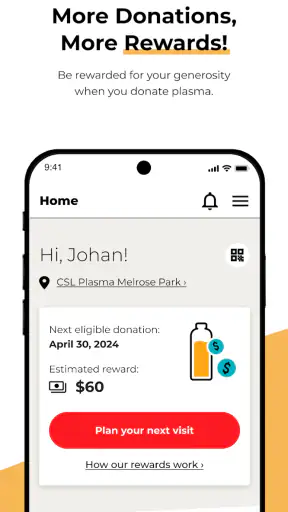
There is another trade-off around rewards. The app’s purpose includes helping donors receive rewards, which may make it more motivating for people who already understand and accept the donation program. But I would not choose to donate solely because a mobile app makes rewards easier to view or manage. The medical screening, eligibility, time commitment, and personal comfort of donation should come first. The app supports that decision; it should not make the decision for me.
Small workflow choices that improve the experience
My first recommendation is to install CSL Plasma before the day of a planned visit, not while already traveling to the center. That gives me time to sign in, understand the layout, and notice whether my phone is ready. It also separates technical setup from the donation itself. If something needs attention, I can deal with it calmly instead of trying to solve it in a queue.
My second recommendation is to use the app alongside, not instead of, the information given by center staff. This is particularly important when a donor’s circumstances change. A screen can help organize the process, but staff are the people to ask when a health question, eligibility concern, or unusual situation comes up. I would never use the app as a reason to ignore instructions from qualified personnel.
My third tip is to think of the app in stages. Before donating, use it to prepare. During the visit, keep attention on the center’s instructions rather than constantly checking the phone. Afterward, return to it for the parts of the donor routine that are actually useful to review. This staged approach prevents the app from becoming a distraction and makes its limited purpose work better.
For people who donate often, it may also be worth establishing a consistent checking habit instead of opening the app randomly. For example, I might review it when planning the week and again before leaving for a visit. That is more efficient than repeatedly searching through the app without knowing what I need. The best experience comes from treating it as a lightweight routine organizer, not as a place to spend idle time.
Who should use it, and who should skip it?
I would recommend CSL Plasma to an existing CSL Plasma donor who wants a more convenient digital connection to the donation process. It is also worth considering for someone preparing to become a regular donor and who prefers keeping donor-related tasks on a phone. The free price removes the financial barrier to trying it, and the Everyone content rating makes it broadly approachable from an age-classification standpoint.
I would be more cautious recommending it to someone who donates rarely, has no nearby connection to CSL Plasma, or does not want another account-based service on a phone. Occasional donors may find that the normal center process is enough, especially if they do not need to check information between visits. Likewise, someone looking for a complete medical record, symptom checker, or personal wellness coach should choose a different category of app.
I would also skip it as a primary solution if my phone is too old or unreliable for routine mobile use, even though the stated minimum Android requirement reaches back to version 7.0. A compatible operating system is helpful, but a damaged battery, unstable connection, or very limited storage can still make any donor app inconvenient. In that situation, the better choice may be using the center’s established in-person process and keeping personal reminders elsewhere.
What the current release tells me about longevity
The current version is 4.2.0, and the app was released on July 22, 2020. That history suggests this is not a brand-new experiment that might disappear after a brief trial. It has had time to become part of a larger donor workflow, which matters for anyone deciding whether learning the app is worthwhile.
At the same time, a mature app can carry older design decisions. I would not expect every screen to feel as modern as the newest consumer finance or social apps. In this category, I care more about stable access to donor tasks than visual novelty, but people who expect highly polished navigation may notice the difference. The moderate average rating reinforces my view that CSL Plasma is best approached as a practical utility with room for occasional friction.
Resource demands should remain reasonable for its intended use. This is not an app I would expect to run continuously or use for long, media-heavy sessions. The main performance risk is therefore not sustained workload but the timing of a quick launch when I am already busy. Preparing ahead, keeping the phone in good condition, and maintaining a backup plan are more useful than trying to optimize the app like a demanding game.
My performance verdict for donors
After weighing speed, repeated use, stability, and device limitations, I see CSL Plasma as a focused tool that earns its place when it matches a real donation routine. It is convenient because it brings donor-related activity closer to the point where I need it, and its official connection to CSL Plasma makes it more relevant than improvised alternatives. The free model also makes testing it straightforward for people who already use the organization’s centers.
My reservations are equally practical. The app cannot shorten every part of an in-person visit, replace staff guidance, or serve as a general medical platform. Its public rating is good enough to show clear usefulness, but not so high that I would promise a frictionless experience on every phone. Older devices, poor connectivity, infrequent donors, and people who dislike digital administration may all find the benefit smaller than expected.
For me, the deciding question is simple: do I need a dedicated mobile companion for CSL Plasma donations? If the answer is yes, I think CSL Plasma is worth trying. I would install it before my next visit, explore the donor workflow without rushing, and keep the app as a preparation and follow-up aid. If my needs extend beyond plasma donation, I would pair it with a broader health or calendar solution rather than expecting one specialized app to manage everything.
In the end, CSL Plasma works best when it quietly removes small points of friction from a recurring donor routine. It is not trying to be a complete healthcare universe, and that limitation is also its clearest strength. For the right user, it can make preparation and donor administration feel more organized without demanding much time or device power. For everyone else, the ordinary alternatives may be enough.


